
What Does Establish Justice Mean? ⚖️ Understanding Fairness
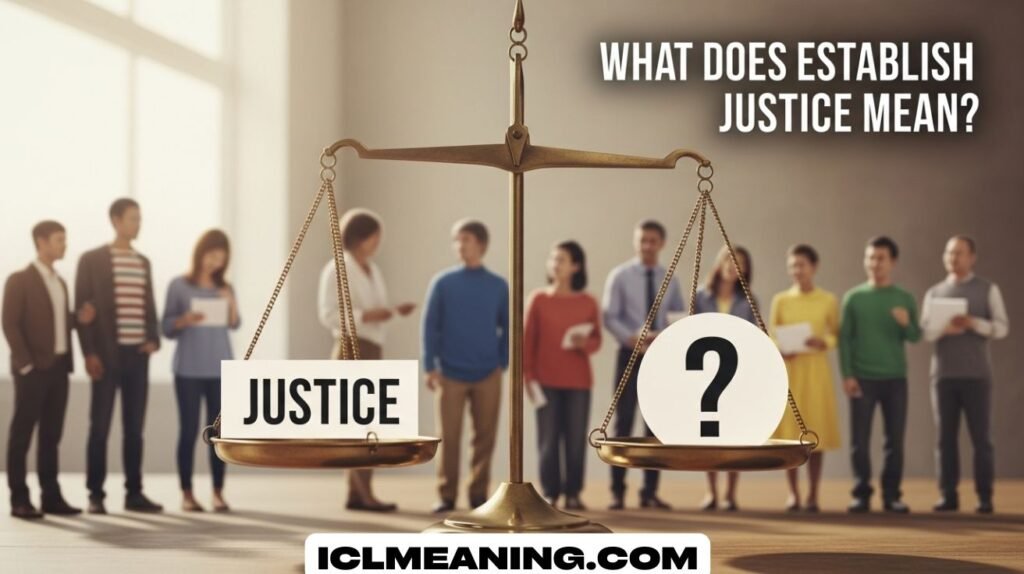
To establish justice mean to make sure everyone is treated fairly. It also means following rules and protecting people’s rights. Justice is about doing what is right and equal for all.
Justice affects everyone in daily life. It helps people feel safe and respected. Understanding justice makes communities stronger and fairer.
People can establish justice mean by being fair and kind. Governments, schools, and families all play a role. Small acts of fairness can make a big difference in life.
Defining “Establish Justice” 🔍
To establish justice means to create a society where fairness, equality, and moral responsibility guide actions and decisions. It is not just a legal term but also a moral and social principle. Legal justice ensures that laws are applied fairly, social justice ensures equal treatment in society, and moral justice emphasizes doing what is ethically right. The meaning of establish justice combines all these dimensions to create a balanced and fair society.
For example, when the government protects the rights of all citizens regardless of their wealth, gender, or background, it is actively promoting justice. In daily life, this can be seen when individuals treat others fairly, stand against discrimination, or encourage ethical behavior in work and social interactions. A simple table can help summarize the main aspects:
| Aspect of Justice | Description | Example |
| Legal justice | Fair application of laws | Court ruling in favor of a wronged employee |
| Social justice | Equal opportunities and rights | Affirmative action policies |
| Moral justice | Ethical and fair behavior | Businesses refusing corrupt practices |
Historical Context of Establishing Justice 📚
The idea to establish justice is not new. Ancient civilizations recognized the importance of fairness. Hammurabi’s Code, one of the earliest written legal codes, focused on ensuring fairness in society. Roman Law emphasized judicial fairness and the rule of law, which are still relevant today. Religion also influenced justice, with many faiths teaching that moral responsibility and ethical behavior are essential to a fair society.
In the USA, the phrase “establish justice” appears in the Preamble of the Constitution. It shows that justice in governance was a key goal for the Founding Fathers. They believed that protecting rights and ensuring fairness and equality were essential to building a strong nation. Over centuries, the concept has evolved, including movements for civil rights, women’s suffrage, and anti-discrimination laws, reflecting the ongoing effort to promote justice in society.
Legal Perspective on Establishing Justice ⚖️
From a legal standpoint, to establish justice is to ensure that laws are applied fairly and consistently. Courts play a major role in achieving legal justice, as they make decisions based on impartial interpretation of the law. Legislators also help by creating laws that protect human rights and ensure equality before the law. Enforcement agencies uphold these laws to maintain rule of law and accountability and transparency.
For instance, the landmark Supreme Court case Brown v. Board of Education (1954) established justice by ruling that racial segregation in public schools was unconstitutional. This example shows how the legal system can correct unfair practices and protect the rights of citizens. Without such systems, societies risk corruption, inequality, and social unrest. Legal system integrity is essential to ensure fairness and maintain public trust.
Social and Moral Dimensions of Justice 🌍
Justice is not only about laws. It also includes social justice and moral justice. Fair treatment means that people are given equal opportunities, regardless of race, gender, religion, or social status. Protecting rights involves safeguarding vulnerable groups from discrimination and exploitation. Ethical behavior encourages individuals and organizations to act with honesty, integrity, and accountability.
Social and moral justice often overlaps with legal systems, but it also extends to personal and community behavior. Communities thrive when there is social harmony, empathy, and fairness in daily interactions. People who practice civic responsibility actively contribute to a just society by participating in local decision-making, volunteering, and standing against wrongdoing.
Establish Justice in Daily Life 💡
You don’t have to be a government official to establish justice. Individuals can practice fairness and ethical behavior in everyday life. Treating others with respect, standing up against bullying, ensuring honesty in business dealings, and mediating disputes fairly are all ways to promote justice.
For example, a manager who treats employees equally, gives credit for work fairly, and resolves conflicts impartially is practicing justice in daily life. Similarly, educators can establish justice by promoting inclusion and fairness in schools. These actions, though small, contribute to larger societal fairness and equality.
Why Establishing Justice Matters 🔥
Establishing justice is crucial because it builds trust, stability, and harmony in society. When justice is not present, corruption, inequality, and social unrest increase. People lose faith in institutions, and conflicts become more frequent. Conversely, societies that prioritize justice foster ethical behavior, accountability, and human rights protection.
For the USA, justice is central to democracy. Citizens expect impartial decision-making and accountability and transparency from leaders. Ensuring fairness and equality helps protect democracy and promotes social harmony. Justice is not just a legal concept; it is a moral compass guiding individuals and institutions.
Read Also : Glazing Slang Explained: Why Everyone’s Saying It and What It Means
Justice in Governance and Leadership 🏛️
Leaders have a responsibility to establish justice for their citizens. Governments achieve this through fair legislation, unbiased administration, and holding officials accountable for misconduct. Justice in governance ensures that policies are implemented equitably, protecting rights and maintaining societal trust.
For example, a fair electoral system that gives every citizen an equal vote helps to promote justice. Transparency in lawmaking and unbiased enforcement of laws are also critical for maintaining legal justice. Leaders who uphold ethical standards inspire confidence and encourage citizens to engage in civic responsibilities.
Establish Justice in Business and Organizations 💼
Justice is not limited to governments; businesses and organizations must also establish justice. Ensuring equal pay for equal work, implementing non-discriminatory hiring practices, and creating transparent grievance systems are ways organizations can uphold fairness.
Companies that adopt fair policies promote ethical behavior and protect the rights of employees. For instance, a corporation that addresses complaints fairly, avoids favoritism, and ensures accountability and transparency demonstrates moral justice in the workplace. This not only benefits employees but also strengthens organizational reputation and integrity.
Philosophical Perspectives on Justice 📚
Philosophers have explored the idea of establishing justice for centuries. Aristotle viewed justice as giving each person their due, while John Rawls emphasized fairness and equality of opportunity. Mahatma Gandhi linked justice with truth and nonviolence, showing the moral dimension of justice.
Justinian I once said, “Justice is the constant and perpetual will to allot to every man his due.” This quote reflects the balance between legal justice, moral justice, and social justice. Philosophical perspectives remind us that justice is not only about following laws but also about creating a society guided by fairness and ethical principles.
Challenges in Establishing Justice ⚠️
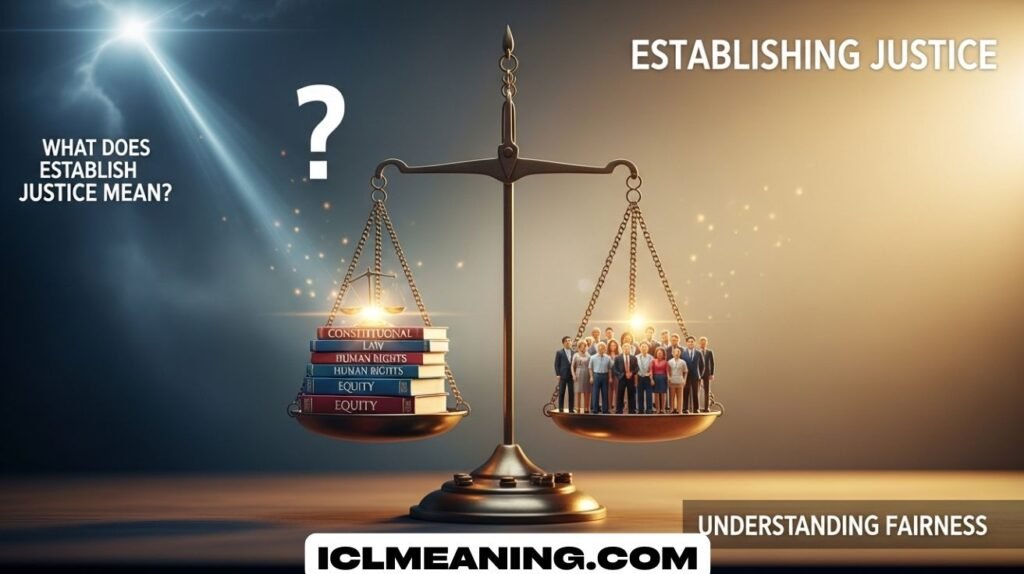
Achieving justice is not easy. Bias and discrimination can skew fairness, corruption can undermine laws, and conflicting interests can complicate decisions. Even with strong legal systems, inequalities persist, and some groups remain marginalized.
For example, workplace discrimination continues despite anti-discrimination laws, showing that legal measures alone are not enough. Overcoming these challenges requires justice education, civic awareness, and personal commitment to ethical behavior and fairness.
Steps to Promote Justice Effectively ✨
Promoting justice involves understanding rights and responsibilities, educating communities, encouraging ethical behavior, and holding systems accountable. Mediation and conflict resolution help resolve disputes fairly, while community programs raise awareness about human rights.
Individuals can practice justice in daily life by standing against unfair practices, treating everyone equally, and encouraging social harmony. Organizations and governments can strengthen legal justice by implementing transparent policies and ensuring accountability and transparency.
Justice Across Cultures 🌎
While justice is a universal concept, its interpretation varies across cultures. Western societies often emphasize legal rights and equality before the law, while Eastern cultures focus on moral duties, community harmony, and ethical behavior. Indigenous traditions often prioritize restorative justice, reconciliation, and collective responsibility. Understanding these differences helps establish justice in multicultural societies like the USA, promoting inclusion and fairness.
Establish Justice Through Education 📖
Education plays a vital role in fostering justice. Teaching civic responsibility, critical thinking, moral reasoning, and human rights helps individuals understand how to promote justice in daily life. Schools and community programs that emphasize justice education empower citizens to contribute to fairness and equality, creating a more just society.
Justice and Technology 💻
Modern technology also impacts justice. Legal tech, such as AI-assisted case analysis, can improve judicial fairness, while digital platforms increase accountability and transparency. Social media can highlight injustices and mobilize corrective actions. Tools that allow citizens to report corruption or abuse help establish justice by making the legal system more transparent and responsive.
Custom Example Sentences Using “Establish Justice” 📝
“The new law aims to establish justice for underrepresented communities.”
“By creating a transparent hiring process, the company established justice internally.”
“Activists work tirelessly to establish justice for victims of discrimination.”
“Courts play a crucial role in establishing justice by interpreting laws impartially.”
Defining “Establish Justice”
To establish justice means creating fairness, equality, and moral rightness in society. It is the foundation of legal justice, social justice, and moral justice, guiding laws and personal behavior. When governments or individuals act ethically and protect rights, they are actively promoting justice. Understanding this concept helps citizens recognize how fairness and equality shape communities.
In everyday life, justice in daily life is about treating everyone with respect and fairness. Simple acts like standing against discrimination or resolving disputes fairly demonstrate ethical behavior. By combining legal, social, and moral perspectives, society achieves a balance where human rights protection and fairness coexist, ensuring accountability and transparency in all areas of governance and community life.
Historical Context of Establishing Justice
The idea to establish justice dates back to ancient civilizations. Laws like Hammurabi’s Code and Roman law emphasized judicial fairness and rule of law, laying early foundations for equality. Religion also shaped moral justice, teaching ethical treatment of others and fair treatment as a societal value. These historical systems influenced modern democratic principles in the USA.
In the United States, the Constitution mentions establish justice in the Preamble, showing that justice in governance was a key priority. Movements for civil rights, women’s suffrage, and anti-discrimination laws evolved from this principle. These historical efforts illustrate the ongoing challenge of how to establish justice while protecting rights, promoting equality, and maintaining social harmony across diverse communities.
Legal Perspective on Establishing Justice
From a legal perspective, establishing justice ensures laws are applied fairly and equally. Courts, legislation, and enforcement agencies work together to provide legal justice and uphold rule of law. By protecting rights and maintaining legal system integrity, society guarantees that disputes are resolved impartially, and citizens can trust the judicial system to enforce fairness without bias or corruption.
Landmark cases in the USA show how courts help promote justice. For example, rulings against segregation or workplace discrimination demonstrate equality before the law. These legal measures safeguard human rights protection and encourage accountability and transparency. Legal systems combine fairness, ethical behavior, and moral reasoning to provide both judicial fairness and social justice in everyday governance.
Read Also : YN Slang Meaning: Discover How and Why Everyone Uses It in 2026
Social and Moral Dimensions of Justice
Social justice focuses on ensuring fairness and equal opportunities in communities. By protecting the vulnerable, promoting ethical behavior, and preventing exploitation, societies create social harmony. Moral justice ensures people act responsibly and treat others fairly. This combination of social and moral responsibility is essential to achieving long-term equality and fairness across society.
Individuals contribute by practicing justice in daily life. Standing against bullying, promoting inclusion, and treating others with respect are acts that reflect moral justice. Ethical behavior combined with awareness of rights helps citizens protect vulnerable populations. By understanding the meaning of establish justice, communities can foster fairness, empathy, and civic responsibility that extend beyond legal systems into daily human interactions.
Establish Justice in Daily Life
Justice is not only a legal or governmental concept; it starts with individual actions. Justice in daily life includes treating family, colleagues, and strangers fairly, resolving conflicts without bias, and promoting honesty. Small acts of fairness and ethical behavior contribute to wider societal social justice, helping communities thrive with trust and harmony.
Everyday decisions influence society’s moral balance. When people advocate for fairness in schools, workplaces, or neighborhoods, they help protect rights and promote ethical behavior. By modeling integrity and fairness, individuals reinforce legal justice, moral justice, and social harmony. Understanding how to establish justice personally can inspire others to act ethically and responsibly in all areas of life.
Why Establishing Justice Matters
Justice is the backbone of trust and stability in society. Without it, corruption, inequality, and social unrest increase. Establish justice principles ensure fairness and equality while protecting rights, promoting ethical behavior, and encouraging responsible governance. Citizens feel secure when justice is applied consistently and transparently.
In the USA, prioritizing justice strengthens democracy. Fair laws and unbiased administration support justice in governance, and uphold human rights protection. Promoting social justice and moral justice creates confidence in institutions, encourages civic responsibility, and fosters social harmony. Justice is not only a principle but a practical requirement for peaceful, stable communities.
Justice in Governance and Leadership
Leaders are expected to establish justice by creating fair policies and protecting citizens’ rights. Justice in governance requires accountability and transparency, impartial administration, and legislation that promotes equality before the law. Ethical leadership encourages fairness in public service and inspires trust among citizens.
Governments that uphold legal justice and social justice strengthen democracy. Leaders who address corruption, enforce laws fairly, and ensure human rights protection demonstrate judicial fairness and moral responsibility. Citizens recognize that how to establish justice relies on leadership committed to both law and ethical behavior, reflecting a balance between governance and moral principles.
Establish Justice in Business and Organizations
Businesses and organizations can establish justice by ensuring fair treatment of employees, implementing equal pay, and promoting diversity. Transparent grievance procedures reflect accountability and transparency, while ethical business practices protect rights and reinforce moral justice. Companies that act fairly contribute to social harmony and ethical workplace culture.
Organizations also uphold legal justice by adhering to employment laws and anti-discrimination policies. Leaders who promote fairness, inclusion, and integrity set an example for employees. Ethical behavior combined with policies that protect rights demonstrates justice in daily life, reinforcing the importance of fairness, civic responsibility, and overall human rights protection in professional environments.
FAQs
What’s another way to say “establish justice”?
Another way to say it is “promote fairness” or “ensure equality and rights.”
Who establishes justice?
Justice is established by governments, courts, leaders, organizations, and individuals who uphold fairness and the law.
What is meant by justice in simple words?
Justice means treating everyone fairly, protecting rights, and doing what is morally right.
What does it mean to establish social justice?
It means creating equality, protecting vulnerable groups, and ensuring fair opportunities for all in society.
Conclusion
Establish Justice Mean to make sure everyone is treated fairly and equally. Justice helps people follow rules, respect each other, and protect rights. It is not only about laws but also about being honest, kind, and responsible. When governments, leaders, and ordinary people act fairly, they help create a safer and stronger community. Justice brings trust, peace, and fairness in schools, workplaces, and neighborhoods.
Every person can help establish justice mean in daily life by standing up against unfairness and treating others with respect. Following rules, being fair, and helping those in need are small steps that create a big difference. Learning and practicing justice makes communities better and happier for everyone.