
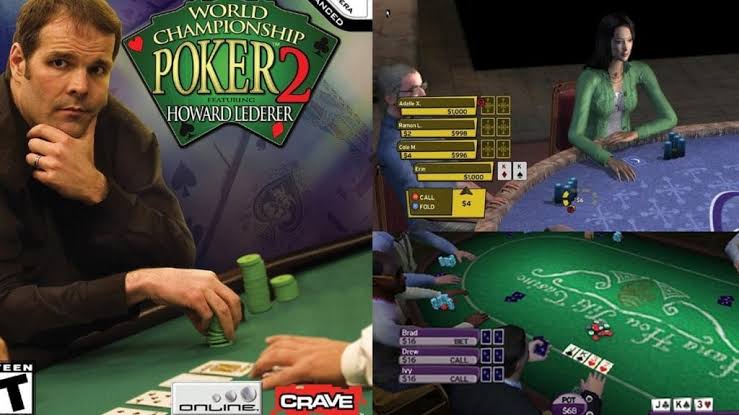
By the early 1970s, computer poker programs were already reducing the familiar card game to text and numbers controlled through small command sets. Their presentation was spare because the machines had little capacity for decoration. Yet the central achievement was substantial. Software could manage the deck and apply the rules while supplying an opponent without a human dealer.
Those early programs belong to a long history that moved through television consoles, home microcomputers, optical discs, and network connections. Each stage changed the appearance and structure of the cards. Hardware determined the input method and opponent behavior. It also controlled where participants could join a session.
Mainframe Foundations
The earliest computer card titles grew from academic and institutional computing. Mainframes were expensive shared systems, so programs generally communicated through terminals instead of dedicated screens. A player typed a command and received a textual account of the result. Cards might appear as abbreviations, while chips and wagers were stored as simple numbers.
These limits encouraged a concentration on procedure. The program had to shuffle without obvious patterns and compare hands correctly before responding to a legal action. A convincing visual table was beyond reach. The computer opponent also followed narrow rules, often drawing or folding according to fixed thresholds.
Code circulated among institutions and appeared in printed collections. Hobbyists also retyped it, and one version could acquire small changes as it moved between systems.
Cartridge Consoles in the Living Room
Dedicated home consoles brought card software to a television audience during the late 1970s. Mattel test-marketed the Intellivision in 1979 with Las Vegas Poker & Blackjack among its initial titles. The cartridge later became a pack-in release, which placed a simulated card table beside action titles in many households.
Console design introduced a different problem. The program needed to fit a limited cartridge and work with a specialized controller while remaining readable from across a room. Intellivision overlays labeled keypad controls, helping players select wagers and decisions. Large card symbols and short animations gave the procedure a visible setting.
The television also made the activity social, although private cards created an obvious design challenge on one shared screen. Some releases favored play against the machine. Others used passing controls or carefully staged displays.
Home Computers and Typed Programs
Home microcomputers expanded quickly at the end of the 1970s and through the 1980s. The Apple II and Commodore 64 joined the Atari 8-bit family and IBM-compatible machines in a varied software market. Owners could load a program from cassette or floppy disk. They could also type a listing printed in a book or magazine.
For card titles, the keyboard was an advantage. Developers could assign direct commands to actions and allow players to enter exact amounts. More memory supported additional variants and statistical records, along with opponents that had recognizable tendencies. Improved color graphics made tables and card faces easier to distinguish.
The personal computer also encouraged experimentation. Small publishers could release specialized card collections, and hobbyists could alter BASIC code. A modern reader interested in playing poker games online therefore belongs to a tradition shaped partly by users who typed entire programs before they could play a single hand.
Graphical Interfaces and Mouse Control
During the late 1980s and early 1990s, graphical operating systems altered the expected interface. A mouse could select a card or press an onscreen button. Windows displayed instructions and statistics without replacing the table. Menus made several variants available within one package.
This transition reflected increasingly accessible personal computing. An account of the programming language that made computers personal notes how printed BASIC collections helped move small programs among early users. Later graphical software hid most of that code, letting the player begin without learning commands or correcting typing errors.
Computer opponents became a prominent selling point. A portrait suggested personality, while the actual decision system might still rely on hand strength and randomized responses. Even limited variation made solitary sessions feel less mechanical.
Storage Capacity and Multimedia Presentation
Floppy disks held more information than early cartridges, but capacity still constrained animation and sound. Hard drives and CD-ROM releases created room for recorded speech and detailed backgrounds. They also supported tutorial material and larger collections of opponents. The growth followed changes across the computer industry. The computers that changed the world included home-oriented systems whose integrated disk drives made substantial software libraries practical.
Multimedia sometimes weakened the simulation. Long video clips could slow the pace, and elaborate opponents sometimes repeated the same lines. Voice and character animation nonetheless communicated reactions that text had previously described.
The expanding storage also supported instruction. A release could explain rankings and demonstrate controls while preserving a history of prior hands. This helped card software serve as both entertainment and a private practice environment.
Modems and Early Network Sessions
Local computer opponents remained common, though modem connections offered another possibility. Two distant users could exchange decisions through bulletin board systems or direct connections. The low transmission speed favored turn-based card software because each action required very little data.
Wider internet access during the 1990s made networked sessions easier to organize. A definitive internet history traces multiplayer development to the network’s early years, showing that shared remote worlds preceded the commercial web.
Network play changed the designer’s responsibilities. The software now had to keep every client synchronized and recover from interruptions. It also needed a lobby or another method for matching participants. The table became a service with continuing technical needs and dependencies outside one disk.
Consoles After the Internet Transition
Later consoles combined living-room controls with network functions associated with personal computers. Larger storage allowed detailed rooms and character models. Standardized accounts made it easier to locate other participants.
Controllers still shaped the interface. Radial menus and directional selection replaced the mouse, while prompts had to remain legible on televisions of different sizes. Designers also used vibration and sound cues to confirm an action. These additions made the interface feel physical even when the essential decision remained a menu choice.
Cross-platform releases reduced the separation between console and computer editions. One project could share rules across several systems, then adapt its input method for each machine.
Preservation of a Fragmented Record
The history of card software is difficult to preserve because a program depends on interconnected parts. It may require a particular operating system and controller as well as a server or physical medium. Documentation and packaging can explain controls that are obscure when a program is viewed alone.
Research on collecting and preserving video games and related materials examines software, hardware, documentation, and production records as parts of one historical record. The range matters because a title’s visible program cannot explain every dependency. This is especially relevant when original network services no longer exist.
Preservation reveals how many solutions were temporary responses to specific machines. A keypad overlay solved one console’s input problem. Typed commands suited a terminal. Mouse buttons fit a graphical desktop. Each form documented the relationship between card rules and the available technology.
A Continuous Technical History
Poker software followed several uneven paths. Early text programs could be fast and direct. Some multimedia releases added atmosphere at the expense of pace. Network access introduced human variety while creating dependencies that physical copies lacked.
The durable feature is adaptation. Developers repeatedly translated hidden cards and ordered actions, along with hand comparison, into the language of a new machine. Mainframe terminals gave way to cartridge consoles and connected personal computers, each offering a different form of the same basic challenge. Their history shows how a stable set of rules can record nearly every major change in consumer computing.
