
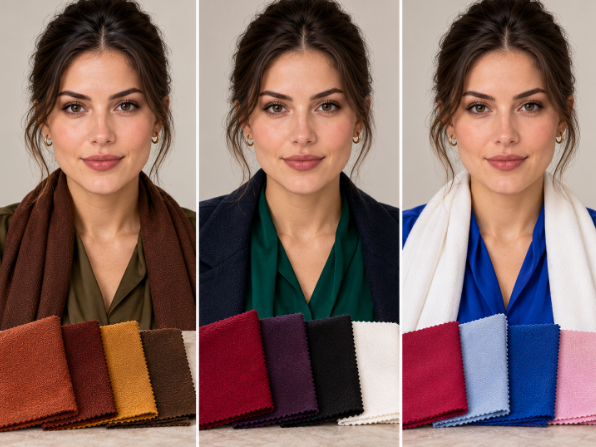
The Deep Winter color palette combines dark neutrals, cool undertones, and rich jewel tones. Think midnight navy, deep emerald, cranberry red, and blackberry purple, balanced with black, charcoal, and crisp white.
Also known as Dark Winter, this seasonal palette is associated with naturally deep coloring and an appearance that works well with contrast. If black looks more harmonious against your complexion than camel or warm beige, Deep Winter may be worth exploring.
This guide explains Deep Winter characteristics, flattering colors, neighboring seasons, and practical ways to apply the palette to clothing, hair, makeup, and accessories.
What Is the Deep Winter Color Palette?
Deep Winter is a subtype of the Winter family in seasonal color analysis. Its defining characteristic is depth, followed by cool-to-neutral-cool temperature and relatively clear, saturated colors.
The palette includes:
- Midnight navy: An almost-black blue that works as a versatile neutral.
- Deep emerald: A rich, cool green with noticeable clarity.
- Blackberry purple: A dark purple with blue undertones.
- Cranberry red: A saturated, cool red without an orange cast.
- Charcoal gray: A deep, cool alternative to black.
- True black: A foundational Dark Winter neutral.
- Dark teal: A blue-green shade with substantial depth.
Deep Winter sits between Dark Autumn and Cool Winter in common 12-season systems. It shares depth with Dark Autumn but favors cooler colors, while Cool Winter emphasizes coolness itself.
Understanding Dark Winter in Seasonal Color Analysis
Three color dimensions help distinguish Deep Winter from other seasonal palettes.
Hue: Cool to Neutral-Cool
Deep Winter colors generally have cool or neutral-cool undertones. Reds lean toward cranberry rather than tomato, greens toward emerald rather than olive, and purples toward blackberry rather than reddish brown.
Value: Medium-Dark to Very Dark
Depth is the dominant characteristic. Black, midnight navy, dark teal, and deep plum form the foundation. Icy pink, icy blue, and cool white provide lighter contrast.
Chroma: Clear and Richly Saturated
Deep Winter colors have noticeable saturation without appearing extremely bright. They are clearer than muted Autumn shades but generally less electric than Bright Winter colors.
These characteristics describe a styling framework rather than a scientifically fixed classification.
Key Dark Winter Characteristics: Skin, Hair, and Eyes
Deep Winter is associated with natural depth, coolness, and contrast. However, no single physical characteristic determines someone’s season.
Skin: Deep Winter can occur across fair, medium, olive, and deep complexions. Undertones may appear cool or neutral-cool.
Hair: Natural hair is often dark brown, espresso, or black, sometimes with a cool or ashy appearance.
Eyes: Common examples include dark brown, deep hazel, cool green, and dark gray.
The most useful clue is how different colors appear next to your face rather than whether you match particular physical traits.
How to Tell if You Are a Deep Winter
Compare colors in consistent natural daylight, preferably without strongly colored makeup.
Try these comparisons:
- Black versus camel: Notice which looks more harmonious against your complexion.
- Cranberry versus tomato red: Compare a cool red with a warmer, orange-based shade.
- Emerald versus olive: Observe the difference between clear green and muted, earthy green.
- Crisp white versus cream: Identify which creates a more balanced appearance.
Look for consistent patterns rather than relying on one comparison. Silver jewelry may suit many Deep Winters, but metal preference alone cannot determine your season.
Explore Your Seasonal Colors With Facefy
For a personalized starting point, Facefy offers AI-powered appearance analysis tools that help you explore your natural coloring and possible styling directions.
Its color analysis feature is particularly relevant when you are uncertain whether your coloring aligns more closely with Deep Winter, Dark Autumn, or Cool Winter.
A photo-based assessment can provide useful inspiration for choosing clothing colors, makeup shades, and accessories. However, lighting, camera processing, makeup, and dyed hair can influence the results.
Best Colors for the Deep Winter Palette
A Deep Winter wardrobe combines dark neutrals with saturated jewel tones and selective icy accents.
Essential Dark Winter Neutrals
Black, charcoal gray, midnight navy, blue-black, cool espresso, and dark slate provide a practical foundation.
These shades work well for coats, trousers, dresses, tailoring, and everyday basics.
Crisp white creates striking contrast, particularly in shirts, collars, and accessories.
Signature Deep Winter Jewel Tones
Rich jewel tones bring variety to darker wardrobe foundations.
Popular options include emerald green, sapphire blue, dark teal, cranberry, cool burgundy, blackberry purple, deep plum, and rich magenta.
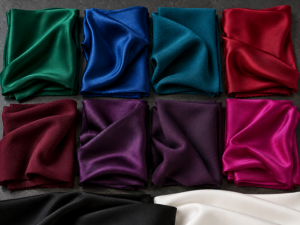
Choose versions that appear substantial and clear rather than faded, dusty, or heavily yellow-based.
Icy Accent Colors
Icy pink, icy blue, and cool white introduce lighter contrast without excessive warmth.
An icy blue shirt beneath a charcoal blazer or a cool scarf against a navy coat can add dimension.
Deep Winter vs. Other Winter and Autumn Palettes
Deep Winter vs. Dark Autumn
Both palettes emphasize depth, but Dark Autumn favors warmer, earthier colors such as rust, mahogany, olive, and chocolate brown.
Deep Winter generally favors charcoal, sapphire, cranberry, and cool emerald.
Deep Winter vs. Cool Winter
Cool Winter prioritizes cool temperature over depth. It includes crisp blues, clear reds, and icy contrasts.
Deep Winter places greater emphasis on dark, rich colors and accommodates some neutral-cool shades.
Deep Winter vs. Bright Winter
Bright Winter emphasizes vivid saturation through electric fuchsia, brilliant cobalt, and striking cool brights.
Deep Winter generally favors darker, inkier versions of similar colors.
Discover Your Deep Winter Color Palette With Facefy
If you want to explore whether these shades complement your appearance, Facefy’s deep winter color palette exploration through its color analysis tool provides a useful starting point.
By assessing a photograph, the tool can suggest seasonal color directions and help you consider which color families may complement your natural features.
You can use these suggestions to compare dark neutrals, jewel tones, and lighter accents before making wardrobe or beauty decisions.
Treat the results as personalized inspiration rather than strict rules, especially when your coloring overlaps with neighboring seasonal categories.
How to Build a Deep Winter Wardrobe
A Deep Winter wardrobe does not need to consist entirely of black.
Try these combinations:
- Charcoal + cool white + cranberry: A polished combination for work or evening wear.
- Midnight navy + emerald: Rich colors without relying on black.
- Black + magenta: A bold pairing with strong contrast.
- Slate gray + deep plum: A softer palette interpretation.
- Dark teal + icy gray: A balance of depth and lightness.
Start with clothing closest to your face, such as shirts, scarves, and jackets, because these make color comparisons easier.
Deep Winter Hair Colors, Makeup, and Accessories
Best Hair Colors
Espresso, dark brown, blue-black, and cool brunette shades often coordinate with Deep Winter clothing.
Cool burgundy, blackberry, and deep plum provide alternatives for more expressive hair colors.
You can explore different shades using Facefy’s hair color try-on before discussing a permanent change with your stylist.
Dark Winter Makeup
Cool reds, cranberry, berry, and deep plum work as lipstick options.
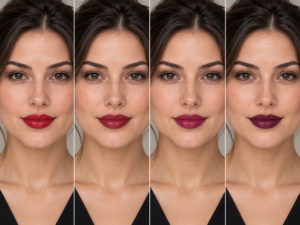
Cool rose and berry blushes complement the palette, while charcoal, navy, plum, and cool taupe provide eyeshadow choices.
Foundation should match your actual skin depth and undertone rather than your seasonal category alone.
Nails and Jewelry
Black cherry, oxblood, midnight blue, and deep plum complement Deep Winter colors.
Silver, white gold, platinum, and gunmetal are traditional jewelry choices, although mixing metals remains a personal preference.
Colors Deep Winter May Want to Use Sparingly
Camel, mustard yellow, rust orange, warm coral, peach, khaki, and dusty warm pastels generally fall outside the traditional palette.
These colors are not forbidden. If you enjoy warmer shades, combine them with preferred dark neutrals or wear them farther from your face.
Final Thoughts
The Deep Winter color palette emphasizes depth, coolness, and rich saturation. Dark neutrals, jewel tones, and icy accents provide a flexible foundation for clothing, makeup, hair, and accessories.
Experiment with colors under consistent lighting and consider how they complement your natural appearance.
Seasonal color analysis should guide your choices, not restrict them. The most useful wardrobe combines flattering color relationships with your personal style, comfort, and preferences.
