
Better Decisions Start With Better Network Data
Telecom operators make high-impact decisions every day. They decide where to build, which addresses to serve, how to respond to outages, when to add capacity, and which projects deserve capital. Each decision depends on a reliable picture of the network as it exists today, not as it was designed months or years ago. That picture must also be understandable across teams, because planning, engineering, construction, operations, and customer-facing groups often make related decisions from the same underlying network information.
That is why data analytics in telecom starts with usable network records. Vetro focuses on fiber network intelligence, including map-based data that helps operators, planners, engineers, and field teams understand physical infrastructure and its relationship to service areas. Its approach to geospatial network management is relevant because location-aware records can connect fiber assets, addresses, construction activity, and operational workflows into a clearer, more cohesive context. Instead of asking users to reconcile separate diagrams, spreadsheets, and local knowledge, a connected, map-based view can provide a common reference point for discussing what is present, what is planned, and what has changed.
When records are incomplete or outdated, service activation can slow down, designs may require rework, and technicians can arrive without the information needed to resolve an issue efficiently. Recent industry research highlights the scale of the problem: only 13% of surveyed operators reported that more than three-quarters of their network records were accurate. Even a small mismatch between a recorded route and field conditions can create downstream effects when several teams depend on that record for scheduling, customer communication, or cost estimates.
Advanced analytics, automation, and AI do not remove the need for sound data. They increase it. A recommendation may appear sophisticated, but it cannot be more dependable than the asset, service, location, and work-history data behind it. For that reason, data improvement should be treated as an operational discipline rather than a one-time cleanup project.
What Makes Network Data Decision-Ready?
Decision-ready data is information that a team can use confidently in the course of real work. It does not have to be perfect in every historical detail, but it must be dependable enough for the decision at hand. For example, a long-range planning exercise may tolerate some uncertainty in older records, whereas a crew responding to a live outage needs precise, up-to-date asset location and connectivity information.
- Accurate: It represents the asset, connection, address, or service state correctly.
- Current: It reflects recent builds, repairs, moves, and maintenance activity.
- Complete: It covers cables, ducts, splice points, equipment, addresses, and service areas.
- Consistent: Teams use the same names, definitions, and formats for the same things.
- Accessible: Planning, engineering, operations, finance, and customer teams can use the information they need.
- Geospatially connected: Users can see assets in relation to routes, sites, addresses, and nearby infrastructure.
Why Telecom Data Loses Value
Data quality problems are rarely caused by a single team or system. More often, they develop when information is split across OSS, BSS, CRM, GIS, CAD files, spreadsheets, and local documentation. Each tool may hold a useful part of the story, but no individual record is sufficient on its own. A design file, for instance, may show intended infrastructure, while a work order or field note may contain details about what was actually installed or changed.
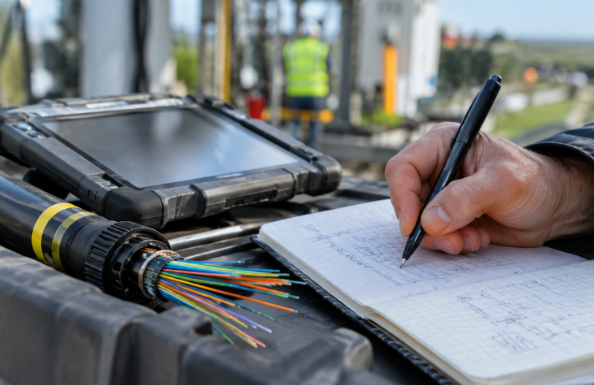
Manual field processes add another challenge. A survey of 500 senior telecom decision-makers found that 48% still used paper notes in the field before entering information digitally, while only 7% reported immediate updates after field work. Delayed updates create opportunities for transcription errors and allow the system of record to fall behind the physical network. Structured mobile forms can help by prompting crews to capture required details consistently, rather than relying entirely on free-text notes or later recollection.
Common causes include inconsistent naming conventions, unclear ownership for corrections, weak integration between legacy platforms, and handoffs that do not require as-built changes to be captured. The answer is not simply to buy another dashboard. It is to improve how data is created, checked, shared, and maintained. A useful process also distinguishes between records that are merely incomplete and records that could lead to an incorrect operational decision, allowing teams to focus correction work where it matters most.
The Four Data Layers Teams Need
- Physical network data: Fiber routes, ducts, poles, cabinets, splice points, strands, ports, and equipment.
- Service data: Addresses, serviceability, customer connections, activation status, and demand patterns.
- Operational data: Work orders, outage records, maintenance history, technician activity, and completion details.
- Business data: Project costs, revenue, capital plans, asset utilization, churn risk, and expected returns.
These layers become more useful when they are connected. A planner can compare demand with available capacity. An operations team can identify the customers and assets affected by a fault. Finance can assess whether an expansion plan supports its expected business case. Connecting the layers also helps teams ask more specific questions, such as whether capacity constraints align with high-demand areas or whether repeated maintenance activity is concentrated around particular assets or routes.
Five Steps to Improve Network Data Quality
1. Create One Shared Data Standard
Define required fields and naming rules for assets, addresses, routes, and service areas. Use the same definitions across engineering, construction, operations, and customer-facing teams so that records can be compared and combined without unnecessary translation. Documenting the purpose of each required field can also make standards easier for users to follow in daily work.
2. Connect Field Work to the System of Record
Make it practical for crews to capture changes while the work is fresh. Mobile workflows can support location details, photos, digital checklists, and structured completion information. The goal is to reduce duplicate entry and shorten the delay between field activity and record updates. When immediate synchronization is not possible, teams can define a clear process to promptly review and post completed field information.
3. Validate Changes Before They Affect Decisions
Use checks for missing locations, duplicate assets, invalid addresses, disconnected routes, and conflicts with existing designs. Review exceptions before they change serviceability, capacity planning, or customer communications. Validation rules should support, not obstruct, the people doing the work, with clear exception handling for legitimate field conditions that do not fit a standard pattern.
4. Start With High-Value Use Cases
Prioritize problems with a visible operational or financial outcome. Outage response, service qualification, capacity reviews, and construction planning are often practical starting points. Measure results through time saved, reduced rework, fewer truck rolls, or faster activation. A narrowly defined use case can generate early evidence of value while providing the organization with a manageable way to test new standards and workflows.
5. Assign Clear Ownership
Teams need defined responsibility for creating, reviewing, correcting, and approving records. Track simple measures such as completeness, accuracy, freshness, and consistency, then discuss them in regular operating reviews. Ownership should include a clear path for resolving questions when one source conflicts with another, rather than leaving users to make informal assumptions.
How Better Data Supports Everyday Work
Network planning improves when teams can compare capacity, demand, service gaps, and projected build costs within a single operational view. Construction and engineering benefit from clearer visibility into existing infrastructure, which can reduce avoidable design changes and improve handoffs. More reliable location and asset records can also help teams identify information gaps before designs move too far into review or construction.
Operations and maintenance teams can use reliable records to locate affected assets, understand previous work, and dispatch technicians with better site context. Customer service and sales teams can provide more confident answers about availability, installation timelines, and potential service impacts. When these teams share a common understanding of serviceability and network status, customer expectations are less likely to be set from incomplete or outdated information.
Preparing for Analytics and AI
Analytics should answer practical questions: Which areas may need capacity next year? Which assets create the greatest service risk? Where do construction delays happen most often? Which customers may be affected by a planned change? The strongest starting questions are specific enough to guide action and connected to data that the organization can inspect and improve.
The industry is moving toward more real-time, AI-assisted operations, but automation should follow data readiness. As AI-driven telecom operations evolve, operators should first use AI for low-risk recommendations, retain human approval for live-service or capital decisions, and ensure every recommendation can be traced to its source data. Teams should also monitor whether recommendations remain useful over time, particularly when network conditions, service areas, or operating processes change.
Metrics That Show Progress
- Percentage of priority network records verified within a defined period.
- Average time between field completion and system updates.
- Number of duplicate, incomplete, or conflicting asset records.
- Time required to qualify a service address.
- First-time fix rate for maintenance visits.
- Projects completed without major redesign.
- Reductions in avoidable truck rolls, rework, and delays.
Common Questions About Telecom Network Data
How often should records be updated?
Update records as close to the field event as practical. Long delays increase the chance that planning, service, and maintenance decisions rely on an outdated network view. The appropriate timing may vary by workflow, but teams should define expectations rather than leaving updates to individual preference.
Can smaller operators use this approach?
Yes. Start with one service area, asset type, or workflow. A focused improvement effort is easier to measure and can establish standards for broader work later. Smaller teams may benefit especially from reducing time spent reconciling disconnected records and searching for the latest information.
Does better data replace expert judgment?
No. Reliable records give engineers and operators a stronger basis for judgment. Field experience, local conditions, and engineering review remain essential. Good data makes expertise easier to apply consistently; it does not eliminate the need for informed human decisions.
A Practical 90-Day Action Plan
- Days 1 to 30: Select one business problem, map the relevant data sources, and identify the largest quality gaps.
- Days 31 to 60: Set standards, assign owners, clean priority records, and improve the connected field or operations workflow.
- Days 61 to 90: Launch a small analytics use case, track outcomes, gather user feedback, and decide where to expand next.
Conclusion
Telecom operators do not need more data for its own sake. They need data that is accurate, up to date, connected, and usable when decisions must be made. Shared standards, timely field updates, practical validation, and clear accountability can turn network records into a foundation for faster service, stronger operations, smarter investment, and responsible AI adoption. The most effective programs make these practices part of routine work, so the network record continues to improve as the network itself changes.
