
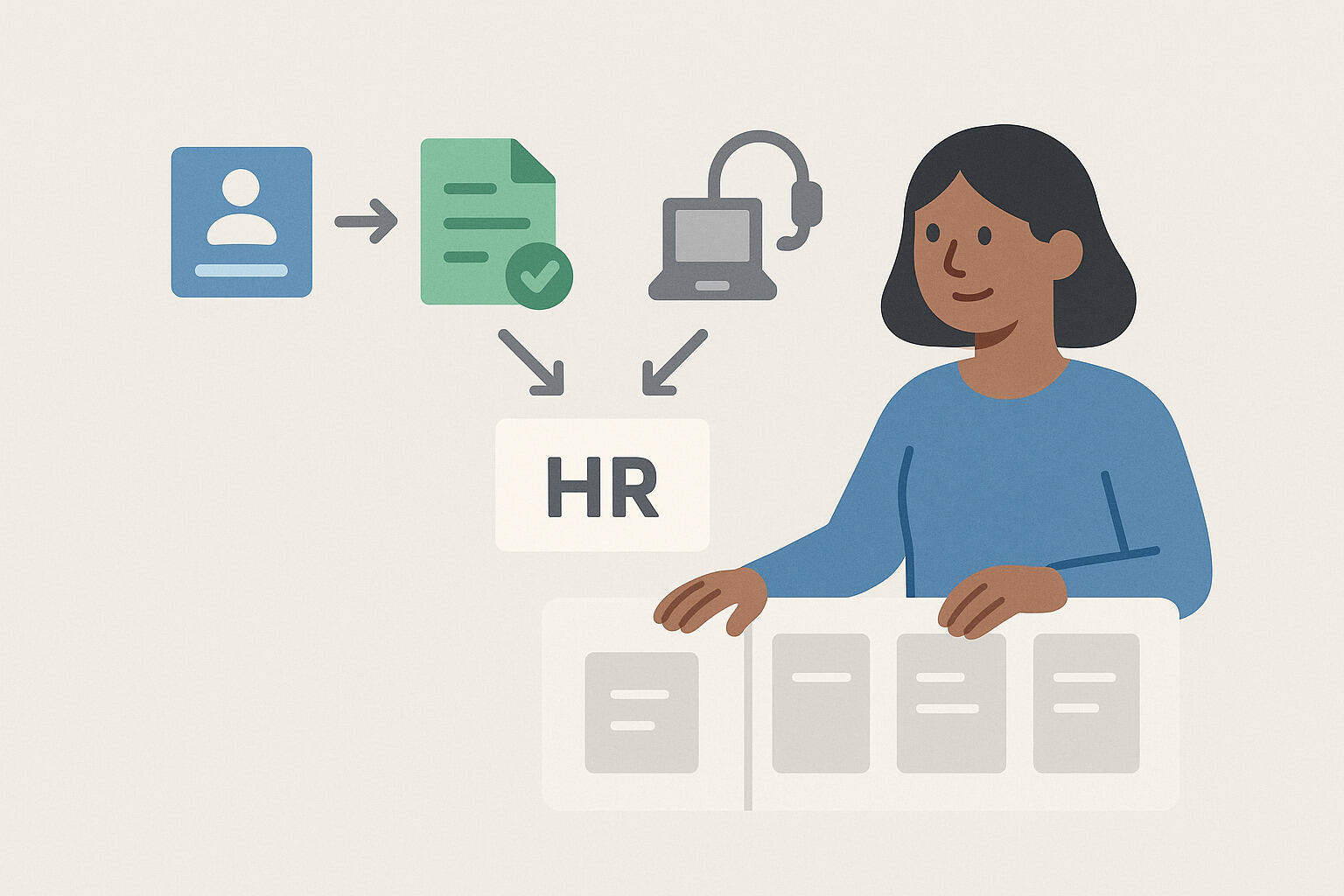
Email may seem like the easiest way to handle employee requests, but it can quickly become difficult to manage as the volume of requests grows. An HR approval request can involve employees, managers, and HR teams, making it easy for requests to get buried, delayed, or missed when everything depends on email threads.
IT requests face a similar problem. An IT service request may need information from the employee, approval from a manager, and action from the IT team. When these steps happen across separate emails, it becomes harder to know who needs to act, what has already been completed, and what is still pending.
When HR Requests Depend on Email, Small Delays Add Up
HR teams handle requests that often need specific information, approvals, and follow-up. Leave, onboarding, reimbursements, policy exceptions, and employee changes may all involve different people.
With an email-based process, an employee might send a request to a manager, wait for a response, and then have HR take the next step. If information is missing, another email is needed. If someone is unavailable, the request can remain stuck.
A structured HR approval process gives each request a defined path. Employees can submit complete information from the start, while requests can be routed according to factors such as role, department, request type, or policy.
For example, a short leave request could go directly to the reporting manager, while a request that exceeds a defined limit could move from the manager to HR. This removes much of the manual coordination that makes email-based approvals slow. Cflow also supports reminders and escalation paths so pending requests do not simply disappear in an inbox.
IT Requests Have the Same Problem, With Higher Operational Impact
IT requests can be even more time-sensitive. A new employee may need system access on their first day. Someone may need new hardware before starting an important project. A request involving a sensitive system may require additional approval before IT can take action.
When these requests arrive through email, chat, or calls, IT teams often have to gather missing details before they can even begin. Cflow’s IT service request workflow addresses this by capturing request type, priority, user details, and other required information through structured forms.
The request can then be classified, prioritized, approved where necessary, and assigned to the appropriate team. For instance, an access request can move to the reporting manager and then IT, while a hardware purchase can follow a route involving the manager, procurement, and IT.
This gives IT teams a clearer process from intake to resolution instead of relying on a chain of emails to determine what happens next.
What Email-Based Processes Make Difficult
Email-based requests create several recurring problems:
Requests get buried
Important requests can disappear among routine messages. Employees may not know whether someone has seen their request or when they can expect a response.
Information is often incomplete
A request may lack an employee ID, required dates, priority, justification, or other details. The team then has to go back and ask for the missing information.
Approvals become harder to track
When multiple people are involved, it can be difficult to know who has approved a request and who is still holding it up.
Follow-ups become part of the job
HR and IT professionals can spend a surprising amount of time sending reminders instead of handling work that requires their expertise.
There is little process visibility
An inbox shows messages, not the complete state of a business process. Managers may struggle to see pending requests, bottlenecks, or ownership at a glance.
A Better Approach Is to Structure the Request, Not Just Digitize the Conversation
Moving requests from email to a structured workflow is not simply about replacing one tool with another. It changes how the process operates.
The request starts with the right information. Rules determine what happens next. The appropriate person receives the request. Approvals happen in sequence or in parallel when required. Delays can trigger reminders or escalations. Once the request is completed, the entire history remains available.
This matters because HR and IT requests often cross departmental boundaries. An employee onboarding process, for example, may require HR to complete its steps before IT provisions access. A hardware request may require both managerial and procurement approval before IT can proceed.
A workflow connects these steps instead of leaving employees and teams to coordinate them manually.
HR and IT Can Work From the Same Principle
Although HR and IT handle different types of requests, the underlying challenge is similar: too many processes depend on people remembering what to do next.
A structured workflow gives both teams:
- Clear request intake
- Defined approval paths
- Automatic routing
- Better visibility into pending work
- Reminders and escalations
- Centralized request history
- Consistent handling of recurring processes
Cflow supports these workflows through an Agentic Workflow Platform that can be configured around different business rules and request types. Its workflow capabilities include routing, notifications, SLAs and escalations, dashboards, integrations, and features such as Kanban and OCR.
The Goal Is Not to Eliminate Email
Email still has a place in everyday business communication. The goal is to stop using it as the system of record for processes that require approvals, routing, deadlines, and accountability.
When HR and IT requests move through structured workflows, employees get clearer updates, managers can act faster, and support teams spend less time chasing information.
The real improvement is simple: instead of asking, “Who has this request?” teams can see where it is, who owns the next step, and what needs to happen next.
That is what makes HR and IT processes easier to manage as an organization grows.
