
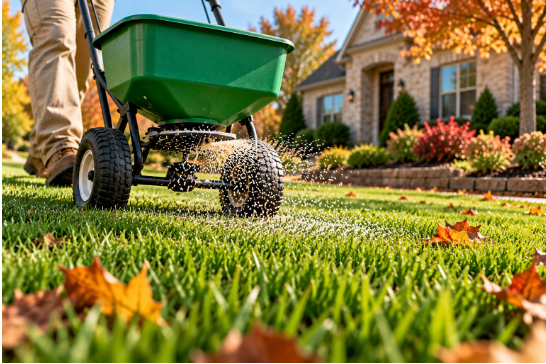
As temperatures begin to cool across North Texas, many homeowners start thinking about preparing their yards for winter. But while mowing less frequently and clearing fallen leaves may be on your fall lawn care checklist, fertilization is another step worth considering.
Does fall fertilization actually help your lawn survive winter? It can, but the benefits depend on your grass type, soil conditions, and the timing of your last application. Applying the right nutrients at the right time can support lawn density, reduce winter weed pressure, and encourage healthy spring recovery. Applying too much fertilizer or waiting too late in the season, however, can do more harm than good.
Here’s what North Texas homeowners should know before reaching for the fertilizer spreader.
How Fall Fertilization Helps Your Lawn
Grass doesn’t stop responding to its environment simply because summer is over. As temperatures change, your lawn’s growth patterns and nutrient needs change, too. A properly timed fertilizer application can help address nutrient deficiencies and support your lawn as it transitions toward winter dormancy.
1. Supports a Healthier Lawn Going Into Winter
A lawn that receives adequate nutrients during its growing season is generally better prepared to handle seasonal stress. Nitrogen supports leaf and shoot growth, while other essential nutrients contribute to functions such as root development and overall plant health.
Fall fertilization can also help maintain lawn density and color while warm-season grass is still actively growing. However, more fertilizer doesn’t automatically mean healthier grass. Applying nitrogen when your lawn already has sufficient nutrients can encourage unnecessary growth and increase the risk of disease.
A soil test can help determine whether your lawn needs additional nutrients before winter.
2. Helps Your Lawn Recover in Spring
North Texas lawns often turn brown or lose much of their green color during winter, particularly when warm-season grasses enter dormancy. This is a normal part of the seasonal growth cycle, not necessarily a sign that your lawn is dying.
Proper fertilization throughout the growing season can help maintain turf health and support recovery when warmer weather returns. Fall fertilization may contribute to that process when nutrients are needed, but it isn’t a substitute for a balanced lawn care program.
The goal is to help your grass enter winter in good condition rather than forcing it to continue growing after the growing season has ended.
3. May Help Reduce Winter Weed Pressure
A dense lawn can make it more difficult for weeds to establish themselves by limiting the open space available for germination and growth. Appropriate fertilization can help maintain that density when the grass is actively growing.
However, fertilizer isn’t a weed-prevention treatment. Applying too much nitrogen, especially when desirable grass is no longer growing actively, can encourage unwanted growth and contribute to winter weed problems.
For better weed control, combine appropriate nutrient management with correctly timed pre-emergent applications and other lawn care practices suited to your grass type.
When Should You Fertilize Your Lawn in North Texas?
Timing is one of the most important considerations when fertilizing in fall. North Texas can experience warm afternoons well into autumn, but cooler temperatures and the first frost eventually signal a change in growing conditions.
It is recommended to complete the final nitrogen application to warm-season lawns no later than six weeks before the area’s first frost date.
Fertilizing too late can leave grass unable to use the added nutrients efficiently. Excess nitrogen may also increase disease pressure, particularly in St. Augustinegrass and zoysiagrass.
The experts at Ryno Lawn Care say, “Avoid fertilizing too late in the season, as it may encourage excessive growth and weaken the grass before winter.”
Get more information about fall lawn care by reading Ryno’s full guide, “What Does a Fall Yard Clean-Up Include?”
Before applying fertilizer, consider the following:
- Grass type: Bermuda, St. Augustine, and zoysia have different nutrient requirements.
- Current growth: Fertilizer is most useful when grass can actively take up and use the nutrients.
- Soil conditions: A soil test can identify nutrient deficiencies and help prevent unnecessary applications.
- Weather: Avoid applying fertilizer immediately before heavy rain, which can wash nutrients away and contribute to runoff.
If your lawn is already growing well and has adequate nutrients, another fall application may not be necessary.
Does Every North Texas Grass Type Need Fall Fertilizer?
No. Different grass varieties respond differently to seasonal changes, so it’s important to understand what grows in your yard before choosing a fertilizer schedule.
Bermuda Grass
Bermuda grass is a warm-season turfgrass that grows most actively during warm weather. As temperatures drop in fall, its growth slows and the lawn eventually enters dormancy.
A properly timed fertilizer application may help maintain turf density and support spring recovery, but nitrogen should be applied while the grass can use it. Avoid fertilizing dormant Bermuda grass during late fall or winter.
St. Augustine Grass
St. Augustine grass also slows down as temperatures cool. Although adequate nutrients are important for maintaining a healthy lawn, excessive late-season nitrogen can increase the risk of disease and winter injury.
Make the final nitrogen application four to six weeks before the county’s historical first frost date.
Zoysia Grass
Zoysia is another warm-season grass commonly found in North Texas. Like Bermuda and St. Augustine, it gradually slows its growth as temperatures fall.
Excessive nitrogen late in the season can increase disease pressure in zoysia. Fertilization should be based on the lawn’s needs rather than a blanket recommendation to fertilize every yard in autumn.
What About Winterizer Fertilizer?
You may see bags of fertilizer marketed specifically as winterizer. These products are intended for late-season lawn care, but the name alone doesn’t tell you whether a product is appropriate for your yard.
Check the fertilizer analysis, application directions, and recommended timing. Consider your grass type and soil test results before deciding whether your lawn needs another application.
A product marketed as a winterizer isn’t automatically the right choice for a North Texas lawn. The amount and timing of nitrogen matter more than the label’s seasonal marketing.
Other Fall Lawn Care Steps That Matter
Fertilization is only one part of preparing your lawn for winter. A few other maintenance practices can help your yard transition into the cooler months.
- Aerate compacted soil when appropriate. Core aeration can improve the movement of air and water through compacted soil and create better conditions for root growth.
- Address weeds before they spread. Identify the weeds growing in your yard and choose the appropriate control method and application timing.
- Keep leaves from accumulating. A thick layer of fallen leaves can block sunlight and trap moisture against the grass.
- Adjust watering as temperatures cool. Your lawn generally needs less supplemental water when growth slows, although occasional watering may still be necessary during dry periods.
- Follow a grass-specific mowing schedule. Continue mowing as needed while the grass is growing, and avoid cutting it too short in preparation for winter.
The Bottom Line: Is Fall Fertilization Worth It?
Fall fertilization can benefit a North Texas lawn, but it isn’t necessary for every yard or every season. The key is understanding your grass type, knowing what nutrients your soil needs, and applying fertilizer while the grass can still use it effectively.
For many homeowners, the best approach is to evaluate the lawn before applying anything. A soil test and a little attention to seasonal growth can help you avoid unnecessary fertilizer applications while preparing your yard for winter and the return of warmer weather.
A healthier spring lawn starts with thoughtful care throughout the year—not simply adding more fertilizer in fall.
