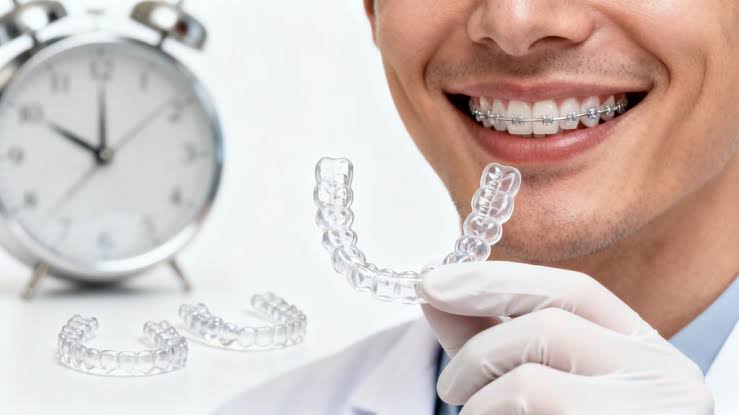
Australian style has always carried a certain contradiction: relaxed yet considered, understated yet unmistakably individual. That philosophy is increasingly visible in the way Australians approach their smiles. Orthodontic treatment is no longer viewed simply as a functional process of moving teeth into better positions. For many adults and teenagers, it has become part of a broader conversation about confidence, convenience, appearance and personal identity. This is where Invisalign fits naturally into the digital age.
Rather than making orthodontic treatment the centre of attention, clear aligners are designed to work quietly alongside everyday life. Their near-invisible appearance appeals to people who may hesitate at the thought of traditional braces, particularly those whose professional or social lives place importance on presentation. Whether attending a business meeting in Melbourne, enjoying brunch in Sydney or travelling along the Australian coast, patients can pursue orthodontic treatment without necessarily making it visually obvious.
The New Language of Australian Dentistry
Modern dentistry is changing because technology has altered more than the equipment found inside a dental clinic. It has changed expectations.
Patients increasingly want healthcare experiences that are convenient, personalised and transparent. Digital consultations, three-dimensional scanning, computer-assisted treatment planning and sophisticated imaging technologies have helped dentists develop more detailed approaches to orthodontic care. Instead of relying entirely on traditional impressions and physical models, digital workflows can provide a highly visual representation of a patient’s teeth and potential treatment pathway.
Within this environment, Invisalign represents more than a cosmetic alternative to metal braces. It demonstrates how orthodontics can become integrated with a digitally connected lifestyle.
Treatment can involve a series of individually designed clear aligners, with each stage applying controlled forces intended to gradually move teeth. Depending on the patient’s circumstances, treatment may address concerns such as crowding, spacing and certain bite irregularities. However, suitability varies considerably, which is why professional assessment remains essential.
When Orthodontics Becomes Personal Style
Fashion is not simply about clothing. It is also about the details people choose to reveal—or deliberately keep subtle.
For decades, orthodontic treatment was associated with visible brackets and wires. While traditional braces remain an effective option for many patients, the aesthetic expectations of contemporary consumers have expanded. Clear aligners offer another approach for people who want orthodontic treatment to occupy less visual space in their lives.
This matters in an era where photographs, video calls and social media have become part of ordinary communication. A smile may appear in professional headshots, Instagram stories, family photographs or spontaneous videos. For some patients, the discreet nature of clear aligners complements a preference for minimalism.
Yet the appeal is not simply vanity. Feeling comfortable with an orthodontic appliance can influence how willingly someone follows a treatment plan. When an appliance fits more naturally into daily routines, maintaining treatment may feel less disruptive.
Convenience Designed Around Real Life
One of the most significant attractions of clear aligner treatment is its relationship with everyday routines.
Aligners are generally removable, allowing patients to take them out when eating and drinking, while also enabling normal brushing and flossing routines. Patients must, however, follow their orthodontic provider’s instructions regarding wear time and maintenance. Convenience does not mean treatment becomes effortless.
This distinction is important.
Digital dentistry can simplify aspects of orthodontic care, but biological movement still takes time. Teeth do not respond to technology alone; they respond to carefully planned forces and the body’s natural biological processes. Treatment duration therefore depends on individual factors, including the complexity of the tooth movements required and how consistently aligners are worn.
The modern patient may expect speed, but good dentistry still requires patience.
Technology Behind the Smile
The most interesting story may actually be happening behind the scenes.
Digital scans can capture detailed information about the teeth and surrounding structures, while specialised software can help clinicians plan tooth movements and visualise potential treatment stages. These tools support communication between dentist and patient by making complex orthodontic concepts easier to understand.
This is part of a much broader transformation. From digital imaging and computer-guided procedures to artificial intelligence-assisted analysis and connected practice-management systems, there are numerous innovations transforming modern dentistry.
The important point is that technology should support clinical judgement rather than replace it. A digital simulation can illustrate a proposed treatment pathway, but an experienced dental professional still needs to determine whether that pathway is appropriate for the individual patient.
A Smile That Fits the Australian Lifestyle
Australia’s diverse lifestyle makes flexibility particularly valuable. People may move between cities, work remotely, travel frequently, participate in sport or maintain demanding professional schedules. Orthodontic treatment therefore needs to fit around life rather than unnecessarily dominate it.
Clear aligners can offer a practical option for suitable patients who value discretion and flexibility. Their removable nature can make certain daily activities easier to manage, although patients must remain committed to wearing them as directed.
Ultimately, the modern smile is not about following one universal aesthetic ideal. It is about creating an outcome that is healthy, functional and appropriate to the individual.
Beyond the Trend
It would be easy to describe clear aligners as simply another fashionable product of the digital era. That interpretation misses the larger shift taking place in dentistry.
The real evolution is the movement towards personalised care, digital precision and patient participation. Australians increasingly have access to tools that allow them to understand their treatment more clearly and become active participants in decisions about their oral health.
Invisalign sits at the intersection of these changes: orthodontics, technology, convenience and contemporary personal style.
The future of dentistry will undoubtedly bring new technologies, smarter digital systems and increasingly sophisticated treatment planning. But the fundamental principle remains surprisingly traditional. Technology can help create possibilities; careful dentistry determines which possibilities are right for each patient.
In that sense, the most modern smile may not be the one that looks the most technologically advanced. It may simply be the smile that feels authentically, comfortably and confidently yours.
Invisalign in the Digital Age: Where Australian Dentistry Meets Fashion, Convenience and Personal Style
 By Andy