
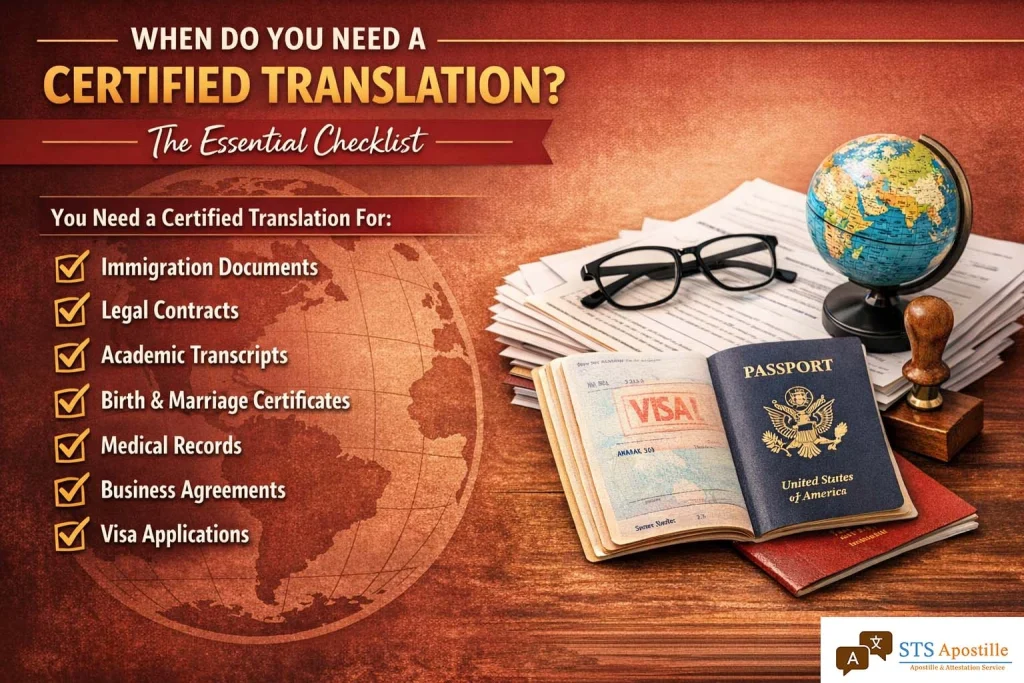
If you are preparing an immigration application, chances are you have already discovered that paperwork is only half the battle. Birth certificates, marriage licenses, diplomas, police records, and affidavits often need to be translated into English before an immigration officer will even look at them. That is when most people start typing “immigration translation services near me” into a search bar, hoping to find a translator who is fast, accurate, and trusted by USCIS or the relevant immigration authority. This guide walks through what reliable translation actually means, where to find it, what questions to ask before you hire anyone, and how to avoid the mistakes that lead to delays or outright rejections.
Why Certified Translation Matters for Immigration Applications
Immigration authorities do not accept casual or informal translations. USCIS and most consulates require what is known as a certified translation, which means the translator or translation company provides a signed statement confirming that the translation is complete and accurate to the best of their ability, and that they are competent to translate from the source language into English. This certification is what gives the document legal weight. It is not the same as a notarized translation, although some agencies or countries do require notarization as an additional step, so it helps to confirm exactly what your specific application requires before you submit anything.
A certified translation typically includes the translated document itself, a copy of the original document, and a signed certification statement from the translator. Some agencies bundle all three into one PDF, while others provide them as separate files. Either way, the goal is the same: to give immigration officers a document they can trust was translated faithfully, without paraphrasing, summarizing, or omitting details.
Mistakes in this process are more common than people expect. A missing stamp, an inconsistent name spelling, or a translator who is not recognized as qualified can result in a Request for Evidence (RFE) or a rejected filing. That is why so many applicants specifically look for immigration translation services near me rather than relying on a friend or family member who happens to be bilingual.
What Makes a Translation Service Reliable
Not every translation company is equipped to handle immigration documents. Reliability in this context comes down to a few concrete factors rather than vague reassurances.
- Experience with immigration paperwork specifically.A translator who mainly handles marketing content or business contracts may not understand the formatting and certification language immigration officers expect to see.
- Knowledge of USCIS and consulate requirements.Requirements can vary depending on whether you are applying through USCIS, a U.S. embassy abroad, or an immigration court, so the service should understand these distinctions.
- A track record of accepted submissions.Ask how long the company has been providing certified translations and whether their documents have been consistently accepted without issue.
- Native or near native fluency in both languages.Translation is not just about swapping words. Cultural and legal context matters, especially for documents like court records or affidavits.
- Turnaround time that matches your deadline.Immigration cases often move on tight timelines, so a service that cannot commit to a clear delivery date is a risk.
- Transparent pricing.Reliable services quote a flat rate per document or per page rather than vague estimates that change after the work is done.
Keeping these factors in mind while you compare options will save you from choosing based on price alone, which is one of the most common regrets people report after a rushed decision.
Where to Look for Immigration Translation Services Near Me
There are several practical paths to finding a translator, and each has its own advantages depending on how quickly you need the work done and how much in-person interaction you prefer.
Local Translation Agencies
Many cities, especially those with large immigrant populations, have dedicated translation agencies that specialize in legal and immigration documents. These agencies often have staff translators fluent in the most commonly requested languages in that region, and some offer walk-in service for people who want to hand-deliver original documents rather than scan them. A quick search for immigration translation services near me combined with your city name will usually surface a handful of local options, and checking their reviews on Google or Yelp can give you a sense of how consistently they deliver accepted translations.
Community and Nonprofit Organizations
Immigrant advocacy centers, refugee resettlement agencies, and community legal aid clinics sometimes offer translation services directly or can refer you to a vetted translator they have worked with before. These organizations tend to have firsthand knowledge of which local translators consistently produce documents that pass USCIS scrutiny.
Online Certified Translation Companies
For many applicants, online services are actually more convenient than local options, since you can upload documents from home and receive a certified PDF within a day or two. Reputable online translation companies publish clear information about their certification process, offer customer support if an immigration officer has a question, and often provide free revisions if something needs correction. This route works particularly well if your language pair is less common and a local agency in your area does not have a qualified translator on staff.
Immigration Attorneys
If you are already working with an immigration lawyer, ask whether they have a preferred translation partner. Attorneys who handle immigration cases regularly usually maintain relationships with translators they trust, and using their recommendation can streamline the process since the attorney’s office is already familiar with the translator’s formatting and certification style.
University Language Departments
In some areas, university language departments or professional translator associations maintain directories of certified translators. This can be a good option for less common languages where local commercial agencies may not have coverage.
Questions to Ask Before You Hire a Translator
Before committing to any service, it helps to ask a short list of direct questions so you know exactly what you are paying for.
- Do you provide a signed certification statement with every translation?
- Have your translations been accepted by USCIS or the relevant consulate before?
- What is your turnaround time for standard and rush requests?
- Do you charge per word, per page, or a flat document fee?
- Will you correct the translation for free if it is rejected or if information needs to be added?
- Can you handle notarization if my case requires it?
- Who actually performs the translation, an in-house translator or an outsourced freelancer?
Getting clear answers to these questions before you send any documents will save you from surprises later in the process.
Red Flags to Watch Out For
Not every service advertising immigration translation is equipped to do the job properly, so it is worth knowing the warning signs.
- No certification statement included with the delivered translation
- Prices that seem far below the market average with no explanation
- Vague or evasive answers about experience with immigration cases specifically
- No physical address, phone number, or verifiable reviews
- Pressure to pay in full upfront with no sample or guarantee
- Machine-translated documents presented as human-certified work
If a service shows more than one of these signs, it is generally safer to look elsewhere, even if the price is tempting.
Common Documents That Require Immigration Translation
Applicants are sometimes surprised by how many documents need translation, not just the obvious ones. Common examples include:
- Birth certificates
- Marriage and divorce certificates
- Academic transcripts and diplomas
- Police clearance certificates
- Military records
- Adoption papers
- Death certificates for deceased relatives listed in an application
- Affidavits and sworn statements
- Employment letters and pay stubs from a home country
Each of these needs to be translated in full, including any stamps, seals, or handwritten notes on the original document, since immigration officers expect a complete and faithful rendering rather than a summary.
FAQ
Do I need a certified translation or can I translate the document myself? You cannot translate your own documents for USCIS purposes, even if you are fluent in both languages, because the certification must come from an independent, qualified translator. A family member also cannot certify the translation for the same reason.
How much does immigration translation typically cost? Pricing varies by language and document length, but most certified translations for standard documents like birth or marriage certificates range from around 20 to 40 dollars per page, with online services sometimes offering lower flat rates.
How long does a certified translation take? Standard turnaround is usually one to three business days, though many companies offer rush service within 24 hours for an added fee.
Does the translation need to be notarized? Not always. USCIS itself does not require notarization, only certification, but some other agencies, courts, or specific visa categories may ask for a notarized translation, so it is worth confirming with the requesting agency.
Can I use an online translation service instead of a local one? Yes, online certified translation companies are widely accepted by USCIS and consulates as long as the translation includes a proper certification statement. Many applicants prefer online services for convenience and faster turnaround.
What happens if my translation is rejected? If an immigration officer flags an issue with a translation, you will typically receive a Request for Evidence asking for a corrected or properly certified version. Reliable translation companies will usually revise the document at no extra charge if the error was on their end.
Do all languages require the same certification process? The certification requirement is the same regardless of language, but availability of qualified translators can vary. Less common languages may take longer to source, which is another reason it helps to start the process early.
Final Thoughts on Choosing the Right Translator
Finding trustworthy immigration translation services near me does not have to be complicated once you know what to look for. Focus on experience with immigration specific documents, clear certification practices, transparent pricing, and a turnaround time that fits your deadline. Whether you choose a local agency, an online certified service, a nonprofit referral, or a recommendation from your immigration attorney, the goal is the same: a translation that is accurate, properly certified, and accepted the first time you submit it. Taking a little extra time upfront to vet a translator carefully is far better than dealing with a rejected application weeks or months into an already stressful process.
